Where glamping resort design actually starts
The mistake most first-time founders make is treating glamping resort design as an architectural problem. It is not. Before a single cabin is drawn, the project has to answer a much harder question: what specific experience is a guest paying for, and why here?
Every strong lodging retreat design guide starts in the same place - positioning. Who is the guest? A design-led couple escaping a US city for 48 hours? A family that wants nature without giving up comfort? A stargazer, a hiker, a wellness traveller? Each of those guests wants a different resort, and each will fund a different resort.
Positioning is also what separates a fundable project from another generic "luxury glamping" concept. The market is crowded. Investors and crowdfunding backers see dozens of decks with the same words - eco, luxury, immersive, off-grid. The projects that actually get funded are the ones that can finish this sentence in one line: "We are the only place where you can ___." If you cannot, the design has not started yet.
From sketch to spatial concept
Once positioning is clear, boutique hotel concept development moves into space. This is the phase where the vision becomes a plan you can actually build, budget and visualize.
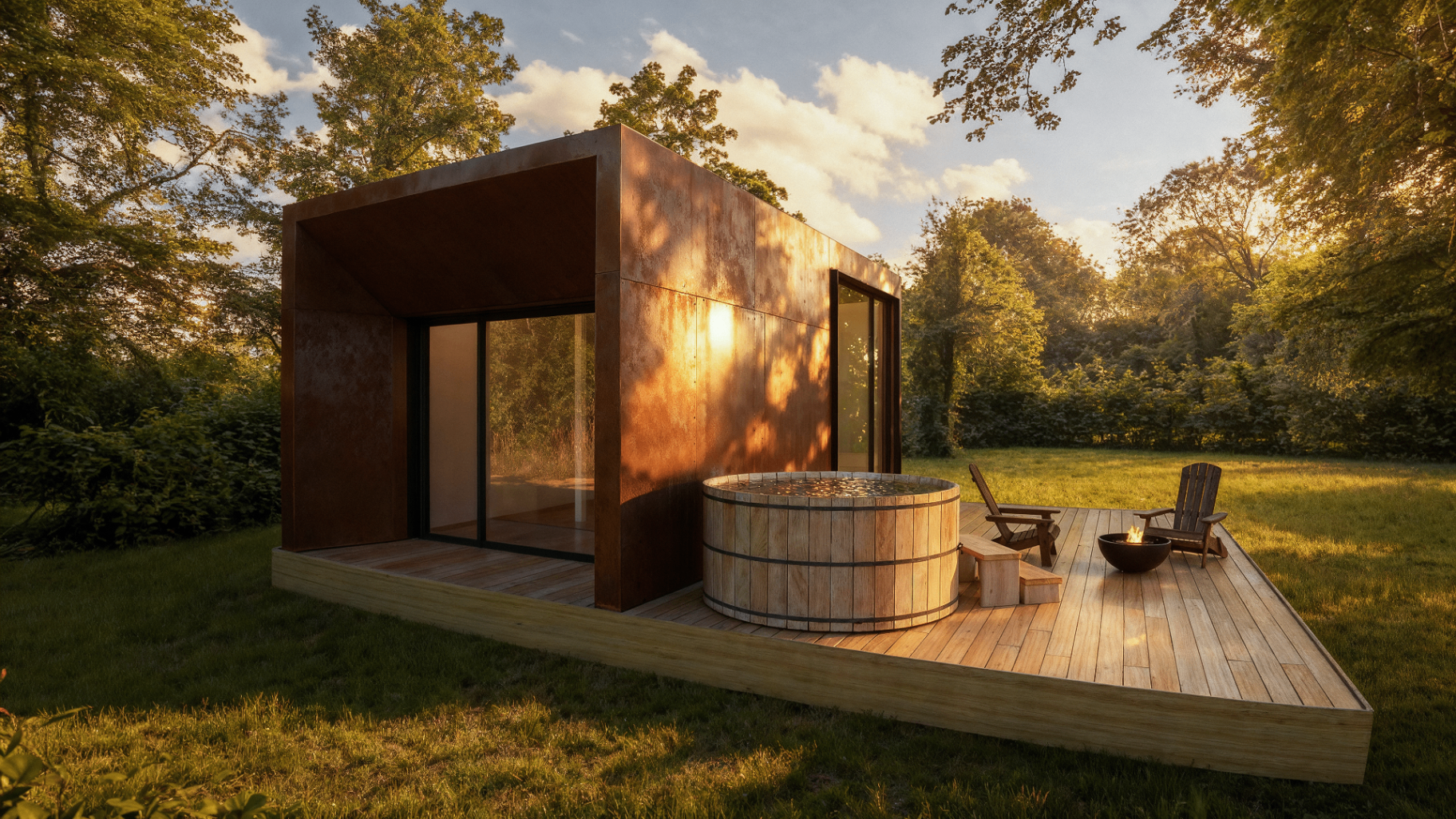
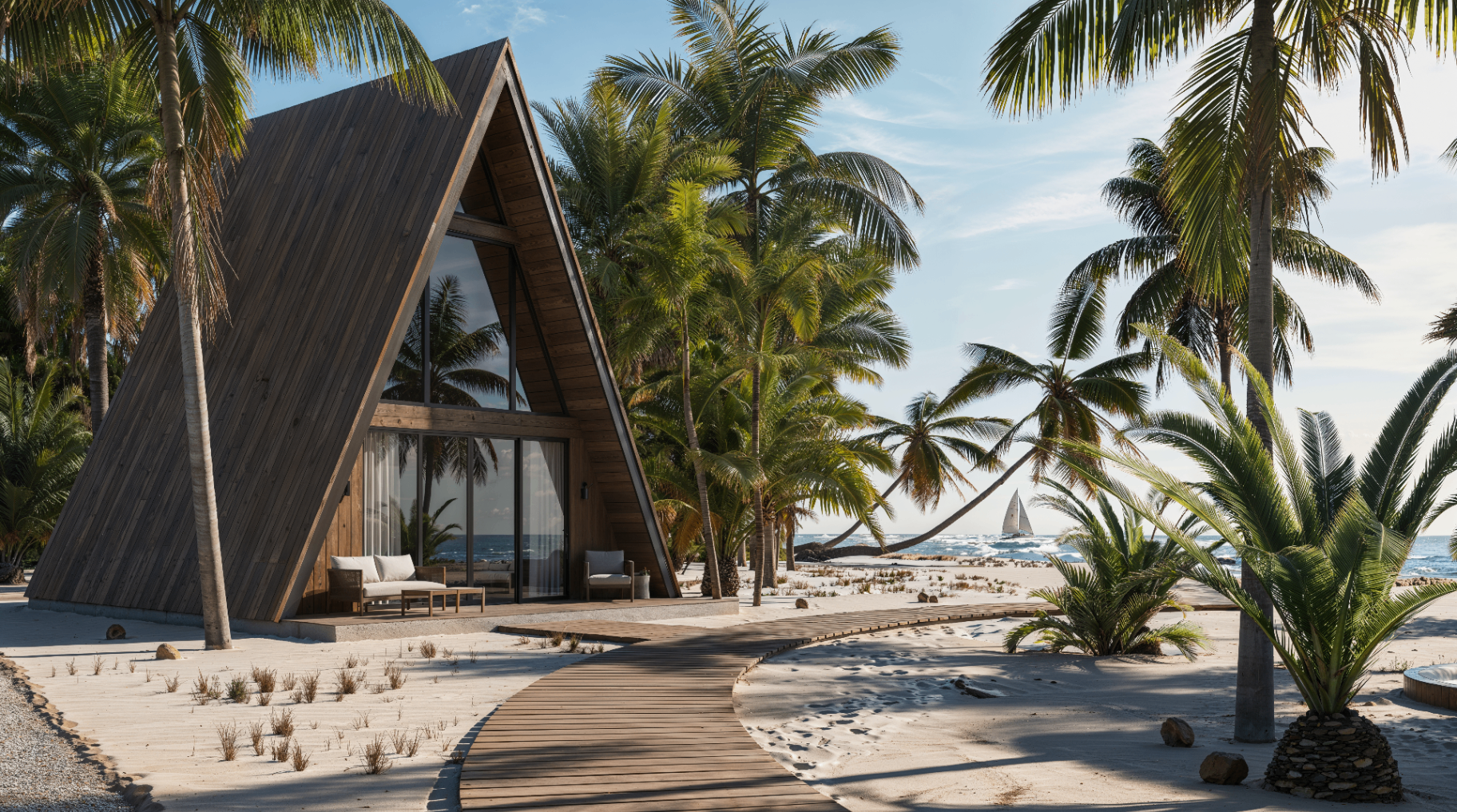
A typical path looks like this: the founder's initial vision and reference imagery are translated into a spatial concept - how many units, which typologies (domes, cabins, treehouses, A-frames, tented suites), how they sit on the land, and where the shared life of the resort happens. Arrival, food and beverage, wellness, fire pits, trails, back-of-house: each of these is a decision that shapes both guest experience and construction cost.
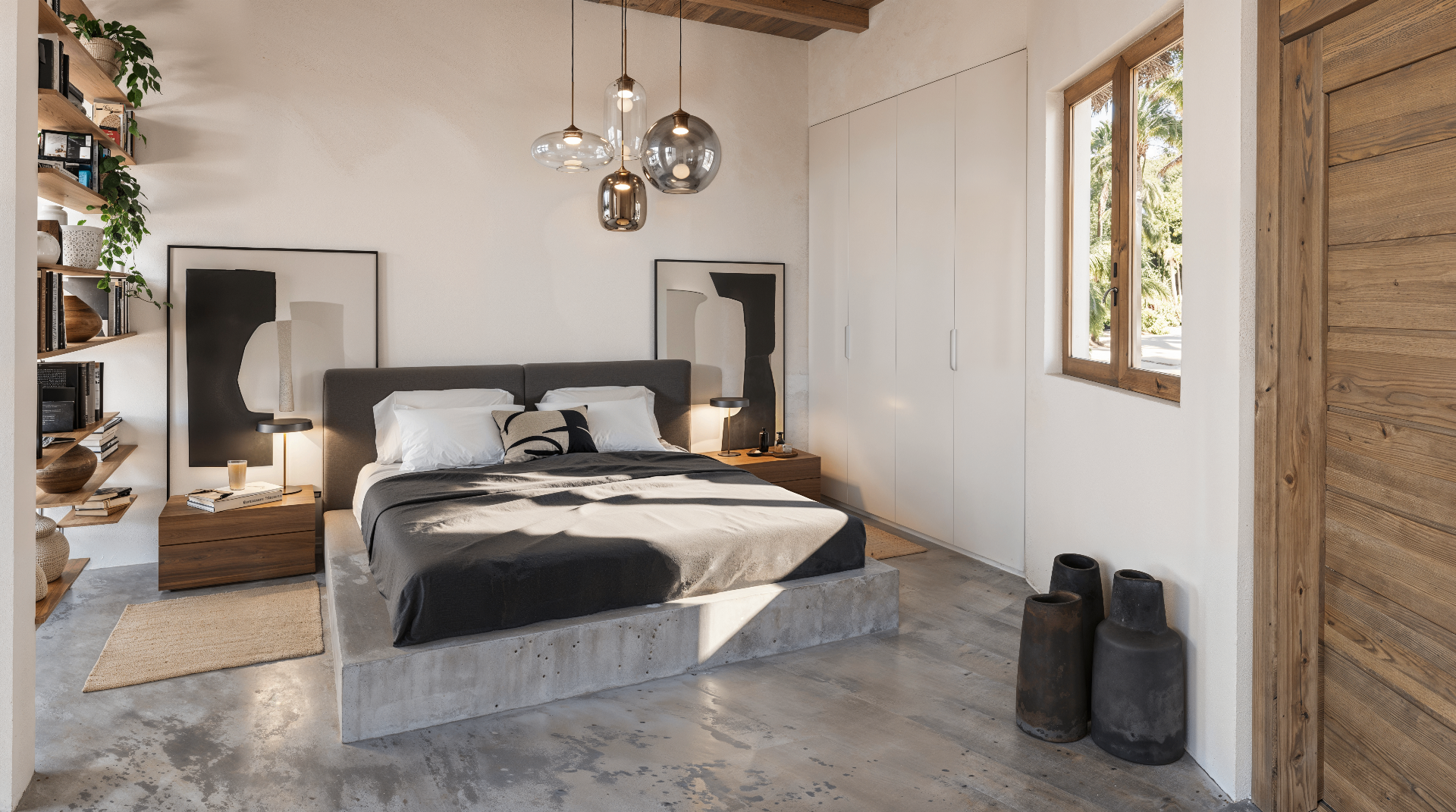
In parallel, a visual identity starts to lock in - the material palette, the tonal atmosphere, the mood. Wood, stone, canvas, mirrored steel, warm interior light: these are not finishes chosen at the end. They are part of the concept from day one, because they are what the guest will feel and what a render will have to communicate.
What makes backers choose one glamping project over another
Two recent US lodging projects show what "differentiation" really means in glamping crowdfunding - and neither won on amenities.
Mirror Hotels built its entire concept around reflective-panel cabins that visually dissolve into the surrounding forest. The site holds only 18 units across 55 acres of private woodland. Scarcity and a single, unmistakable architectural idea did most of the persuasion work before a backer ever read the pitch.
Kosmos Resort took a different route but with the same discipline. The concept is built around one experience: stargazing from a certified dark-sky park. Sixteen villas total, of which four "Galaxy Villas" are fitted with private telescopes. The design, the copy and the renders all point at that one idea.
The pattern is not subtle. Both projects won on one strong, recognisable concept - not on a long list of comforts. A generic feature list is easy to copy and easy to forget. A single, ownable idea is what a backer remembers when they close the tab and decide whether to come back and reserve.
Turning the concept into visual proof
Once the spatial concept is stable, the project has to move from design intent to visual proof. This is the material a founder will actually use to raise money.
For a glamping resort, that visual package usually includes three layers. First, hero renders of the individual units, shot from the angles a guest would experience - approach, threshold, interior, view from the bed. Second, an aerial or masterplan render that shows how the units sit on the land, so a backer can understand scale, density and privacy in a single image. Third, renders of the shared amenities - spa, pool, fire pit, event lawn, restaurant - if they are part of the concept.
Together these images do something a floor plan never can: they let a stranger picture themselves inside the resort before it exists. That is the shift from concept to campaign asset.
Designing amenities that photograph - and render - well
There is a practical layer under all of this that experienced hospitality founders learn quickly: some amenities are worth designing specifically because of how they will show up in images.
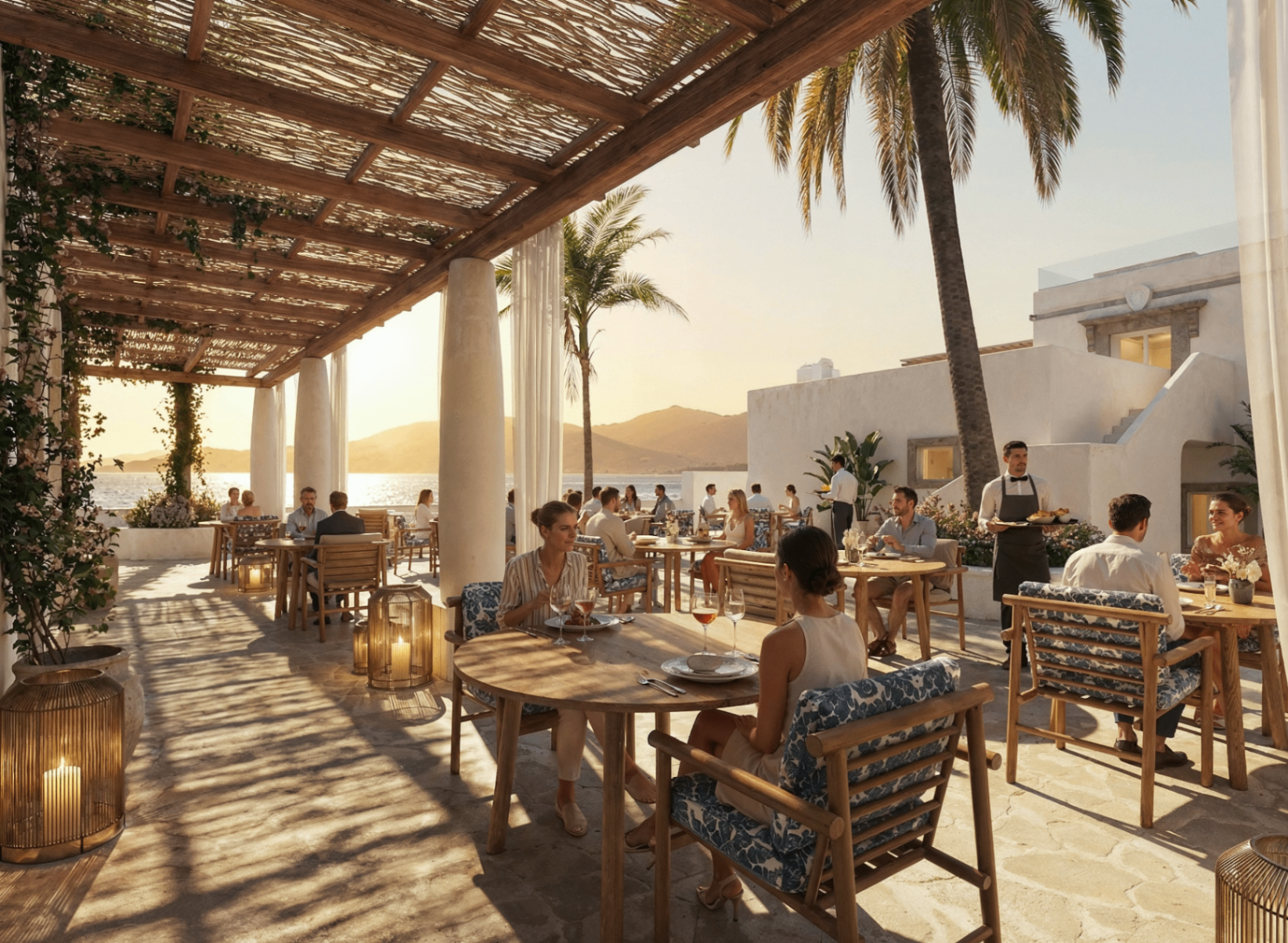
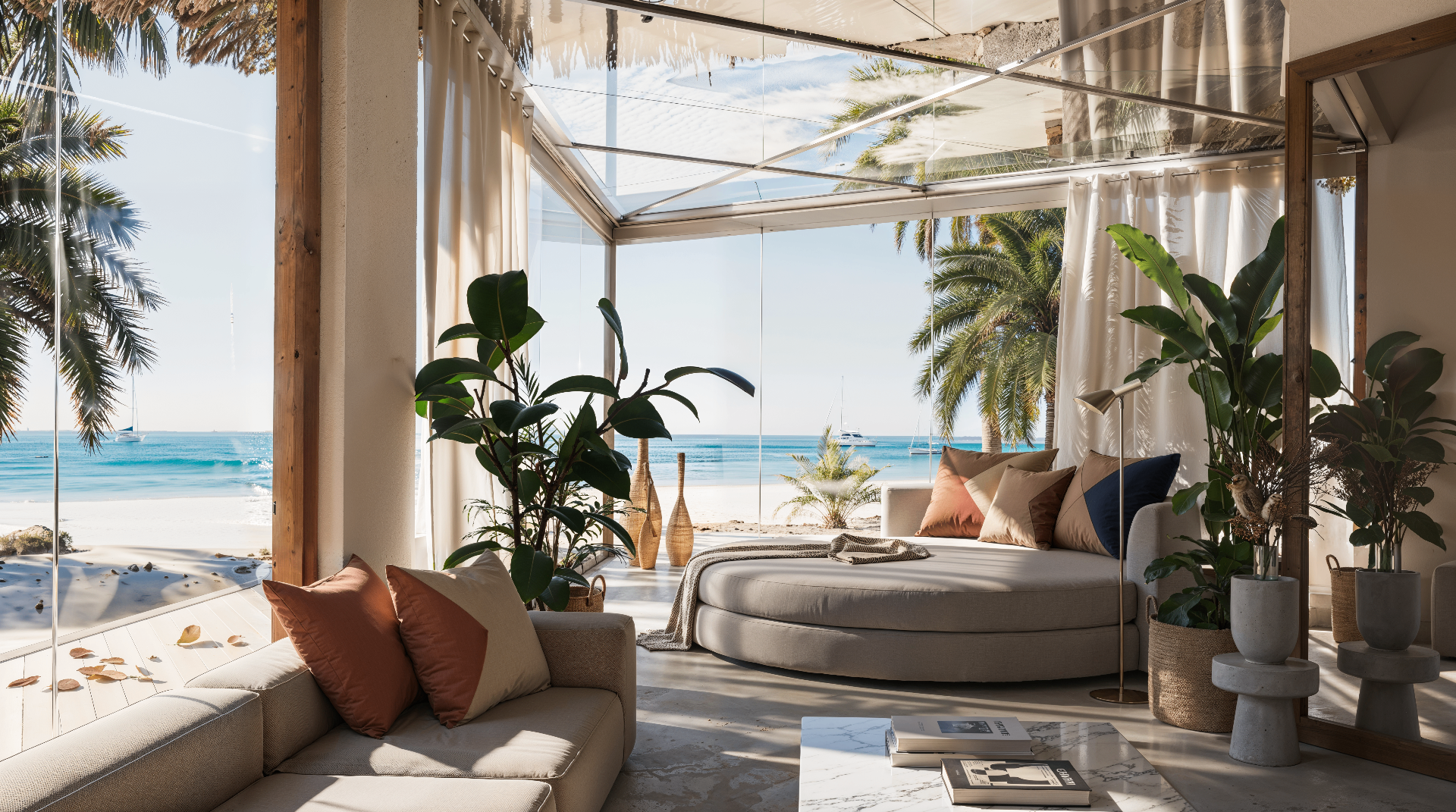
Pools, outdoor spas, lit trails, communal fire pits, sunset decks, sauna cabins on the water - these elements work twice. They work in the real, built resort as guest experiences people will actually pay for. And they work in the campaign as high-emotion renders, video hero shots and social content that keeps the funnel warm long after launch day.
Designing with this dual purpose in mind is not "designing for Instagram." It is recognising that in a pre-construction project, every amenity has to earn its place both in the guest journey and in the visual story that funds the build.
From design to campaign-ready
Once the concept is defined, the site is planned and the visual identity is locked, the project is ready for its final translation - into a campaign-ready visual production. That means a coordinated set of photorealistic renders, a launch video, a landing page and reservation funnel built around the same story.
This is the moment where glamping resort design stops being an internal exercise and becomes something the market can react to. If the concept is strong and the visuals are honest to it, the campaign has a real chance. If either is weak, no amount of ad spend will fix it.
If you are at the stage where the vision is clear but the design and visuals are not yet in place, that is exactly the window where a focused studio partnership pays back the most.